Latest Post
The Leadership Vacuum: What to Do When Your Ship Has No Captain
Throughout my 25-year career, I’ve witnessed quite a few leadership vacuums. It’s what happens when a team lacks clear, accountable leadership or chain of command. Sometimes it’s a physical absence where leadership unexpectedly resigns or retreats with poor succession planning in place. But sometimes, it’s a much slower burn where leadership might technically be present,…

In Spite of 2020, I’m Still Grateful
As an eternal optimist, even I must confess that 2020 left a lot to be desired. And now that it’s finally over, and we await all that 2021 has in store, I’m trying to capture those “2020 moments” that brought me joy. I mean the kind of pure joy that makes you smile without even realizing it.
I know, 2020 reflection calls attention to Covid-19, racial unrest, and political divisiveness, just to name a few. Yet through it all, when it seems like joy was nowhere in sight, I’m determined to bring light to those positive moments at times buried deep within last year. You see, I believe it’s possible to acknowledge the hurt we’ve endured while also finding gratitude for the experience. Though 2020 brought many of us great heartache, there have been glimmers of hope sprinkled about that have hopefully brought a smile or two to the faces of many.
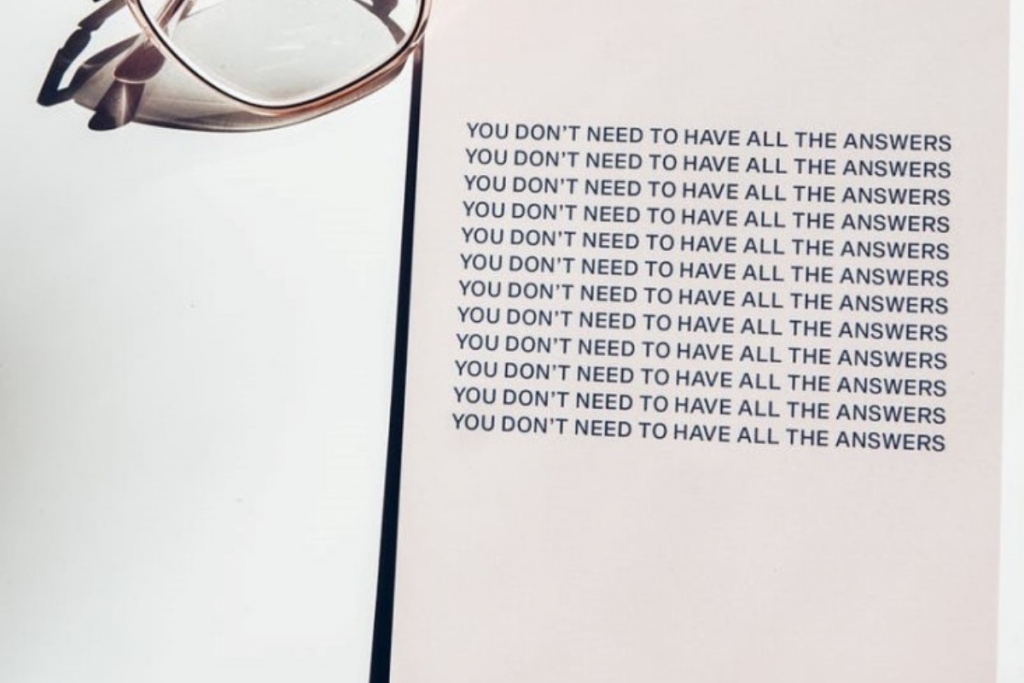
I Don’t Know and That’s Okay: Leadership Isn’t About Having All The Answers
It’s often assumed that a leader needs to be all-knowing. But I question — does this notion actually hinder a leader? As a leader, you are the captain of the ship, but your eyes can’t be everywhere at all times. You need to trust that your shipmates will do their jobs, allowing you to do yours.
If you’re faced with a challenge you’ve never encountered before, it’s okay not to know how to handle it. Admitting you don’t have the answers is a lot better than pretending you do. Wouldn’t you prefer a physician say, “This type of surgery isn’t my specialty. Let’s find someone who is an expert on this matter to assist” rather than him “wing it” in fear of looking weak or not in control? In these scenarios, admitting you need assistance or that you rely on someone else’s expertise isn’t a weakness. Instead, it shows the power of collaboration and your ability to build a strong, diverse team.

Coworker Approved? How to Respond When You Sense a Coworker Doesn’t Like You
Our unconscious mind works much faster than our conscious mind, and according to Dr. Nick Morgan, we are all unconscious experts in reading the intentions of others toward us. Dr. Morgan even suggests that our minds can tell, right away, and with pretty good reliability, if someone is a “friend or foe.”
To me, this sounds like proof behind the phrase “trust your gut.” Perhaps the phrase should be “trust your unconscious mind,” though. One key approach to bring unconscious awareness to conscious thoughts is to observe body language and subtle cues. However, in this virtual world that we’re in, where body language signs are even harder to read via a screen, it’s even more important to be able to pick up on verbal, nonverbal, and communicative cues.

Why Leaders Need a Strong Head and Heart
Though we don’t often find “resilience” included in the competency section of a position description, you’ll find it’s critical of any manager or leader and is oftentimes masked as “does well under pressure.” While this phrase can describe resilience, I believe there’s more to being a resilient leader than the ability to recover from setbacks, adapt well to change, or continue forging ahead at times of adversity. Leaders showcase resilience by remaining confident, optimistic, and innovative, even in the toughest of situations.

Here’s Why You Should Shed the Guilt about Using PTO while Working Remotely
People are craving connection these days, even if it comes through a phone or computer screen. Zoom, Teams, FaceTime and other video calls have undoubtedly become the norm since March and for good reason. I’ve even found that what used to be a simple phone or conference calls have turned into video conferences.
We’re starved for human interaction, and while these new virtual platforms have had positive effects, it’s also had some less-than-ideal repercussions.
Most would have taken paid time off (PTO) for a spring and/or summer vacation by now with the glimmer of the holiday season providing some downtime as well. After all, time off to detach from work and connect with loved ones is crucial to sustaining performance and productivity, and most importantly, preventing burnout.
With people cooped up at home, though, PTO is going largely unused and some employees are secretly burning themselves out.

Is There A Secret to Productivity? 6 Habits of Productive People and 2 Ways to Increase Your Own
We’ve all heard it — the most successful people have at least one thing in common. They wake up before 6 am. “Want to be successful, wake up early,” has been at the top of search results in my quest for the most effective productivity practices. But, if you’re a night owl, don’t give up just yet. While early risers get a lot of credit for success, it’s not the only factor that is essential for productivity. The key, as I see it, lies in finding your ideal routine, not just recreating that of others, or waking up at a certain time.