Latest Post
The Leadership Vacuum: What to Do When Your Ship Has No Captain
Throughout my 25-year career, I’ve witnessed quite a few leadership vacuums. It’s what happens when a team lacks clear, accountable leadership or chain of command. Sometimes it’s a physical absence where leadership unexpectedly resigns or retreats with poor succession planning in place. But sometimes, it’s a much slower burn where leadership might technically be present,…

4 Effective Communication Strategies to Become a Better Leader
We’ve all interacted with leaders at some point in our lives. Maybe it was a boss, a mentor, a coach, a parent, a sibling, or even a friend. And, as we recall, the leaders who we shared the most positive experiences with – the leaders who inspired us to be the best versions of ourselves – were those who understood how to develop a relationship with us, those who empathized with our emotions, and those who knew how to shine a guiding light toward turning our trials and tribulations into success stories.
That’s because great leaders are dependent upon their ability to effectively communicate!

The evolving paradigm of inclusion: Where are we headed?
Ableism. Latinx. Non-binary. Alternative spirituality. Transracial. Mansplain. The landscape of diversity & inclusion is no longer Black and White, or Female and Male; it requires the ability to navigate culture in a manner that is vastly different today than ever before. But just wait until tomorrow!
Countless studies have shown that diverse employee representation at all levels of an organization has a quantifiable impact on financial performance. In fact, it is now commonly acknowledged that diversity & inclusion serve as the engine for many corporations to ensure the knowledge, critical thinking, and innovation required to successfully achieve business and mission-critical objectives. But haven’t we been talking about “the business case” for diversity & inclusion for some time? How much progress have we, as diversity practitioners, really made in our corporations and more broadly throughout society? And does the next generation of diversity leaders have a different agenda from that which we are immersed in today?
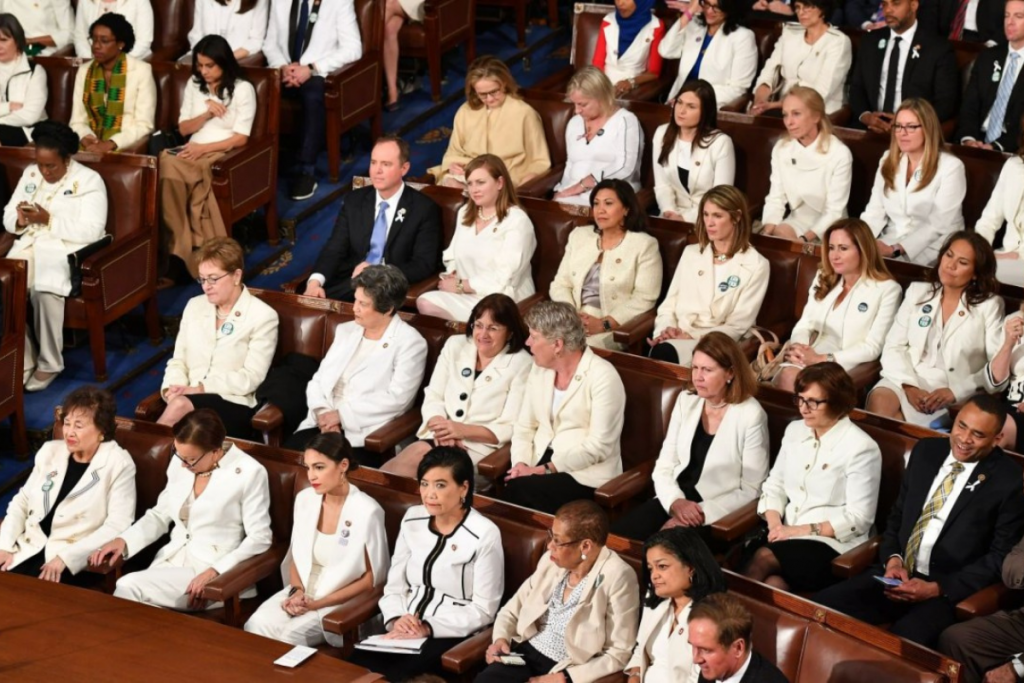
Increased Female Representation in Congress a Byproduct of Continuous Female Rights Advocacy
In 2019, female representation in the United States Congress is higher than ever before.
Following the midterm elections last fall, a record 106 women currently hold seats in the U.S. House of Representatives – 35 of whom earned their seat for the first time – with 25 women serving in the Senate. In total, nearly 25 percent of all congressional voters are now female, marking the highest rate in U.S. History since Jeannette Rankin (R-MT) became the first woman elected to Congress in 1916.
Female inclusion in the government is an amazing aspect of the political spectrum, but the increasing prominence females are holding among society stems far beyond it. More women hold high-profile positions in the workplace and are the primary income earners for their families. More women are successful doctors, lawyers, CEOs, public leaders, media members, entertainers, artists, athletes, coaches and so on.

How to Self Promote Without Bragging
We all know that person who brags endlessly about themselves and their accomplishments. You know, the coworker who goes on and on about her recent promotion or the family member who posts photos of his brand new car on Facebook. For these individuals, self-promotion comes naturally although for most of us, talking about ourselves can be uncomfortable. Before we go into detail about self-promotion, first understand that talking about yourself and your accomplishments is a natural aspect of managing your profile and, in turn, your career. Most people cringe at the thought of having to promote themselves, particularly at work, but this needs to change. You are your greatest product, and you need to make sure you advertise your brand to the right crowd at the right times.

Creating an Inclusive Space and Safe Environment at Work
It goes without saying, diversity and inclusion are strategic organizational imperatives in today’s business landscape. There are publications, job titles, and events that illustrate the importance of these concepts. But what are some actual ways you can begin creating an inclusive and safe environment at your company?
First and foremost, your company needs to understand the relationship between diversity and inclusion. Diversity can exist at your company without inclusion, which can be difficult for some to understand. As Anna Beninger, senior director of research and corporate engagement partner at Catalyst, says, “Diversity is a fact; inclusion is a choice.” When employees do not feel they’re included, costs related to absenteeism, unproductivity and low morale can add up. Research has shown that when diversity and inclusive leadership work together, however, innovation and growth naturally occur.

When Does Hiring for “Culture Fit” Cross the Line of Discrimination?
Making the perfect hire is an art. It requires the ability to properly assess a candidate through an unbiased lens using a delicate balance of factuality and human emotion. With the company’s best interest at the forefront, three fundamental aspects come to mind when I think about what comprises the right person for the job.
- Talent: Some candidates just have the “it factor” more than others. We each hold an array of individual talents that make us who we are; such as an accountant naturally good with numbers or a writer with wordplay that easily flows from their fingertips.
- Credentials: A candidate with extensive study and training displays a proven work ethic and fundamental knowledge in the field through a rigorous ability to facilitate learning. Hard work always beats talent when talent doesn’t work hard.
- Experience: Extensive success in past employment positions displays consistent reliability, an ability to grow and a well-versed skill set that wholly qualifies them for the position.